 LORD'S SUPPER LORD'S SUPPER
One of the surest responsibilities of eldership is assisting the pastor in the celebration of communion, or leading in the service yourself. Only ordained ministers or elders conduct the service. Communion is one of the most solemn and yet joyous occasions in our churches. When it is a time that calls for heart-searching and forgiveness, it is also a time of encouragement and spiritual renewal. Therefore, being able to lead the congregation in this sacred service is one of the most deeply spiritual duties that you, as an elder, will be called upon to perform.
{a}RENEWING RELATIONSHIP: The celebration of communion gives opportunity for those attending to renew and rebuild relationships with God and with their fellow members. As they join together in the washing of one another’s feet and in the eating and drinking of the symbols of Christ’s death, they are reminded of their need of God’s continued grace and forgiving love and for closer fellowship with one another. The Communion service should unite our members and help them to leave with renewed strength and confidence to continue God’s mission in the world.
(b) WHEN TO HOLD The church Manual says, “In the holy Seed church the communion service customarily is celebrated once per quarter.” The words “customarily” suggest only that it has been the practice or custom of our church to hold Communion on a quarterly basis. Paul states,: for as you eat this bread and drink this cup, you proclaim the Lord’s death till He comes (1 Corinthians 11:26). This informs us that the Bible has not established any set number of time for holding the service. It is not how often we celebrate the Communion that is important, but how often we remember “Lord’s death.”
The communion service should most often be held during the Sunday worship hour. However, there may be other or additional occasions when your church chooses to celebrate the service: the conclusion of a week of prayer, the end of a series of revival meeting, a camp meeting, a church retreat, or during youth meetings. Whenever or wherever communion is celebrate, careful preparation should be made with every detail thoughtfully planned and rehearsed. The service ought to be announced at last a week in advance so people may prepare for the event. Deacons and deaconesses should prepare the bread and the wine well beforehand and have the sanctuary and the rooms to be used for Foot washing properly equipped.
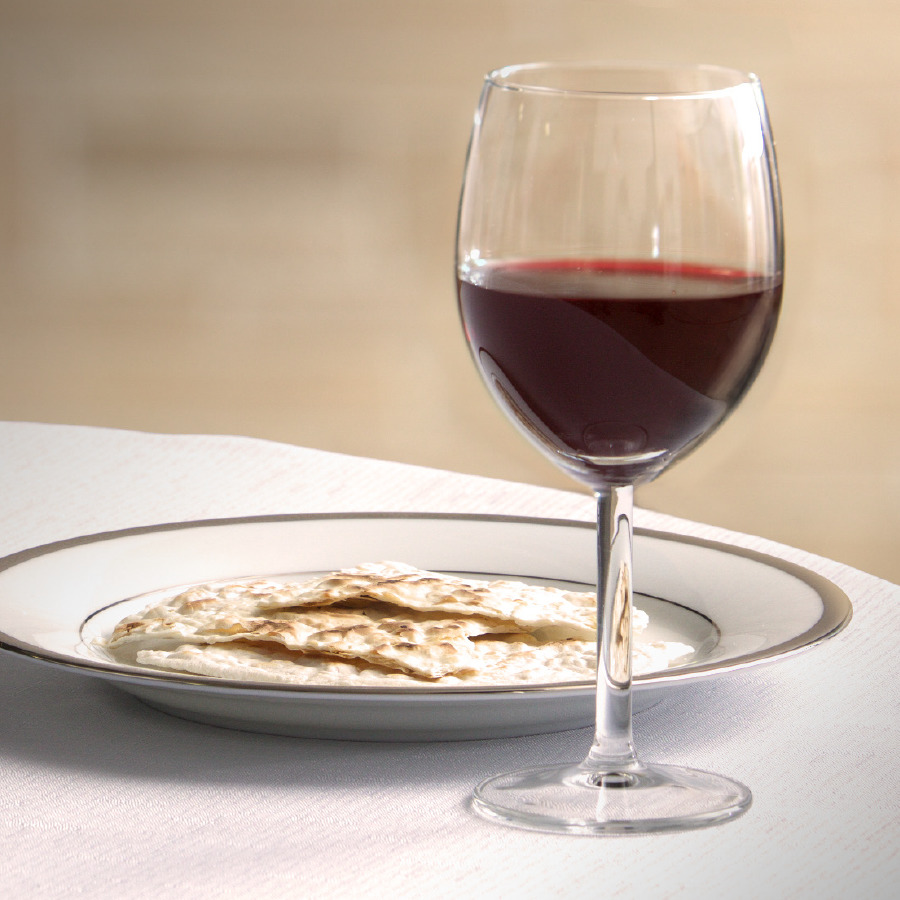
(c) PREPARING THE EMBLEMS Only unleavened bread and the unfermented juice of the grape should be used in the Lord’s Supper. Where it is impossible to obtain grapes, grape juice, or grape concentrate the juice of raisins may be used. In isolated areas where none of these are readily available, the conference or mission will provide advice or assistance. Recipe for communion bread. 1. 1 Cup fin-ground flour (preferable whole grain) 2. ¼ teaspoon salt 3. 2 tablespoon cold water 4. ¼ cup olive or vegetable oil Sift flour and salt together. Pour the water into the oil, but do not stir. Add this to the dry ingredients and mix with a fork until all the flour is dampened. Roll out between two sheets of waxed paper to the thickness of thick pie pastry. Place on an ungreased, floured baking sheet, and mark off with a sharp knife into bite-size squares, being careful to pick each square to prevent blistering. Bake at 450 degrees Fahrenheit for 10 to 15 minutes. Watch carefully during the last five minutes to prevent burning. Serves 50 persons.
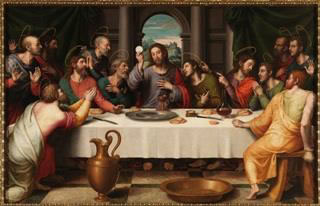
(d) WHO MAY PARTICIPATE? At the time of his last supper, Jesus declared that the bread was a symbol of His body which was “given for you” Luke 22:19. The wine was a symbol of His blood “which is shed for many for the remission of sins” Matthew 26:28. Jesus gave His life for sinner and His invitation to them is to partake of the Communion in remembrance of His sacrifice that is able to set them free from sin. All who feel the need for forgiveness from sin should seek in this ceremony the symbol their cleansing. The Holy Seed Church observes open Communion Adults wishing to participate should not be stopped from doing so. It is not the work of church officers to decide who is worthy or unworthy to take part. “Christ’s example forbids exclusiveness at the Lord’s Supper. It is true that open sin excludes the guilty. This the Holy Spirit plainly teaches. But beyond this none are to pass judgment. God has not left it to men to say who shall present themselves on these occasions. For who can read the heart?” There may be some in the congregation who feel that their sin is the very reason they should participate! Especially encourage these members to attend. Tell them that, as they come in repentance and
accept the symbols of Jesus death, they will find forgiveness for their sins and release from their guilt.
(e) SERMON It is the usual custom in our churches that a 15-20 minutes sermon is preached before members separate for the Foot washing. During this sermon you have opportunity to make clear the meaning of the Foot washing and to encourage members to make clear the meaning of the might have had with others in the congregation. Sometimes you may choose to vary the service by spending a few minutes explaining the meaning of Foot washing and then leaving the rest of the sermon until after participants return. By saving the sermon until before the Lord’s Supper emblems are passed you will be able to focus attention more fully on their meaning.
{f} Here are suggested communion sermon texts: 1. Jesus’ example in foot washing. John 13:13-17 2. The Lord’s Supper (Mark 14, Luke 22) Matthew 26:26 3. Self-denial in those who follow Jesus. Matthew 16:24 4. Eat the flesh and drink the blood. John 6:53-56 5. One bread, one body. 1 Corinthians 10:16-17 6. Proclaiming the Lord’s death. 1 Corinthians 11:23-26 7. Christ’s suffering 1 Peter Note: Each person will be delivered one on a different occasion regarding Lord’s Supper not all at a time because time is short to handle service.
{g} FOOT WASHING Foot washing is a powerful symbol. When we kneel before one another as Jesus once did, and take someone’s feet in our hands to wash them, we are taught important lessons of humility. Through this ceremony, disagreements between members can be settled and wrongs made right (Matthew 5:23). The water that is poured over our feet by our partner represents the spiritual cleansing and refreshing that comes when Jesus applies His blood to our lives. Foot washing should be carefully planned. Basin, water, towels, adequate space and seating, and congenial surroundings need to be provided by the deacons and deaconess. Visitors, new members, youth, and children should be tactfully encouraged to join the foot washing, either to participate or to observe. Assist people to find partners with whom they can share the ceremony. Because Foot washing can be an occasion for making wrongs right, opportunities might be provided for families to share the ceremony together.
Alienation most often occurs within families, perhaps between husband and wife, parents and children, or between children. The ceremony of Foot washing is an excellent way for families to make new beginnings. Consider making provision for families to take part together. When members have assembled ready for Foot washing, the ceremony can begin with prayer. There may be some present who would like to ask forgiveness of their partner for some wrong they have committed. Encourage this kind of confession between participants. In some places members sing hymns quietly as they wash each other’s feet. Some partners like to pray for each other during the ceremony. The whole experience should be a time of sharing and joy that brings members together in unity. At the completion of the Foot washing, members may shake the hand of their partners, or embrace or kiss them, according to the local custom for showing Christian love.
(a) LORD’S SUPPER It works well for the congregation to sing a hymn as they reassemble and the leader, along with the assistants, take their place behind the Communion table. The servers will follow and be seated in the front seats. You may make some introductory remarks about the Lord’s Supper or begin your short sermon according to whichever order of service you have chosen to follow. The bread is then uncovered and prayer is offered for God’s blessing upon this symbol of Jesus’ body. The deacons then take the bread and offer it to members of the congregation. On their return, the elders and yourself are served and you lead the congregation in eating the bread. The same procedure is followed for distributing the fruit juice. During the serving of the bread, hymns sung, passages of Scripture such as 1 Corinthians 11:23-26 may be read, hymns sung, testimonies given, special music presented.
(b) In some of our churches the deacons carry both the bread and juice on the one tray. Worshipers take them together from the tray. Following the service, the juice glasses are in racks provided in the backs of the seats. By following this method, the deacons need to move through the congregation only once, eliminating activity extraneous to the purpose of the ceremony.
(c) ENDING THE SERVICE The communion service should end joyously. Wrongs have been righted. Sins have been forgiven. Faith and hope have been restored. It is a time for rejoicing. Close the service with bright, joyful music. Dismiss the congregation by benediction or silent prayer. Following the serving, deacons and deaconesses should dispose of the leftover
bread and juice in a respectful manner. In no case should it be eaten or drunk.
Why Do The Holy Seed Church Observe the Lord's Supper Differently From the Way Other Religions Do?
We adhere strictly to the Bible in our observance of the Lord's Evening Meal, which is also known as "the Lord's supper," the Last Supper, and the Memorial of Jesus' death. (1 Corinthians 11:20; King James Version) In contrast, many beliefs and practices of other denominations in connection with this observance are not based on the Bible.
Purpose
The purpose of the Lord's Evening Meal is to remember Jesus, showing our gratitude for his sacrifice in our behalf. (Matthew 20:28; 1 Corinthians 11:24) The observance is not a sacrament, or a religious practice that imparts merit such as grace or the forgiveness of sins.* The Bible teaches that our sins can be forgiven, not by a religious rite, but only through faith in Jesus.—Romans 3:25; 1 John 2:1, 2.
How often?
Jesus commanded his disciples to commemorate the Lord's Evening Meal, but he did not specifically say how often. (Luke 22:19) Some feel that it should be observed monthly, while others observe it weekly, daily, several times each day, or as often as a person feels is appropriate.* However, here are some factors that should be considered.
Jesus instituted the Lord's Evening Meal on the date of the Jewish Passover, and he died later that same day. (Matthew 26:1, 2) This was no coincidence. The Scriptures compare Jesus' sacrifice to that of the Passover lamb. (1 Corinthians 5:7, 8) The Passover was observed once each year. (Exodus 12:1-6; Leviticus 23:5) Likewise, the Memorial of Jesus' death was observed once each year by the early Christians, and The Holy Seed Church follow that Bible-based pattern.
Date and time
The pattern established by Jesus helps determine not only the frequency but also the date and time of the Memorial. He introduced the observance after sundown on Nisan 14, 33 C.E., according to the Bible's lunar calendar. (Matthew 26:18-20, 26) We continue to observe the Memorial on this date each year, following the practice of early Christians.*
Although Nisan 14, 33 C.E. was a Friday, the anniversary of that date might fall on a different day of the week each year. We determine the date that Nisan 14 falls each year using the same method as was used in the time of Jesus, rather than applying the method used for the modern Jewish calendar.*
Bread and wine
For the new observance, Jesus used unleavened bread and red wine that were left over from the Passover meal. (Matthew 26:26-28) Following his example, we use bread without leaven or added ingredients and plain red wine, not grape juice or wine that has been sweetened, fortified, or spiced.
Some denominations use bread with leavening or yeast, but leaven is often used in the Bible as a symbol of sin and corruption. (Luke 12:1; 1 Corinthians 5:6-8; Galatians 5:7-9) Thus, only bread free from leaven and other additives can be a fitting symbol for Christ's sinless body. (1 Peter 2:22) Another practice not supported by the Bible is that of substituting unfermented grape juice for wine. Some churches do so because of their unscriptural prohibition against consuming alcohol.—1 Timothy 5:23.
Emblems, not literal flesh and blood
The unleavened bread and red wine served at the Memorial are emblems, or symbols, of Christ's flesh and blood. They are not miraculously changed into or mixed with his literal flesh and blood, as some feel. Consider the Scriptural basis for this understanding.
- If Jesus had commanded his disciples to drink his blood, he would have been telling them to break God's law against consuming blood. (Genesis 9:4; Acts 15:28, 29) Yet this could not be, for Jesus would never instruct others to violate God's law regarding the sacredness of blood.—John 8:28, 29.
- If the apostles had been literally drinking Jesus' blood, he would not have said that his blood "is to be poured out," indicating that his sacrifice was yet to occur.—Matthew 26:28.
- Jesus' sacrifice took place "once for all time." (Hebrews 9:25, 26) However, if the bread and wine were changed into his flesh and blood during the Lord's Evening Meal, then those partaking would be repeating that sacrifice.
- Jesus said: "Keep doing this in remembrance of me," not "in sacrifice of me."—1 Corinthians 11:24.
Those who believe in transubstantiation, that the bread and wine become Jesus' literal body and blood, base this doctrine on the wording of certain Bible verses. For example, in many Bible translations, Jesus is recorded as saying of the wine: "This is my blood." (Matthew 26:28) However, Jesus' words can also be translated as: "This means my blood," "This represents my blood," or "This signifies my blood."* As he had often done, Jesus was teaching by using a metaphor.—Matthew 13:34, 35.
Who partake?
When The Holy Seed Church observe the Lord's Evening Meal, only a small fraction of us partake of the bread and wine. Why is that so?
Jesus' shed blood established "a new covenant" that replaced the covenant between God and the ancient nation of Israel. (Hebrews 8:10-13) Those who are in that new covenant partake of the Memorial emblems. It includes, not all Christians, but only "those who have been called" in a special way by God. (Hebrews 9:15; Luke 22:20) These ones will rule in heaven with Christ, and the Bible says that just 144,000 people receive that privilege.—Luke 22:28-30; Revelation 5:9, 10; 14:1, 3.
In contrast to the "little flock" of those called to rule with Christ, the vast majority of us hope to be part of "a great crowd" who will gain everlasting life on earth. (Luke 12:32; Revelation 7:9, 10) While those of us with an earthly hope do not partake of the Memorial emblems, we do join in expressing thanks for the sacrifice that Jesus made in our behalf.—1 John 2:2.
|
|